


Google is bringing AI Mode to Search to all Spanish speakers around the world, making its most conversational search experience accessible in one of the largest language groups on Earth. The rollout expands a feature that actually aggregates results into a single, retooled response with more obvious follow-ups and citations.
What AI Mode actually does in Google Search
AI Mode is what replaces that old stack of blue links, drawing instead from Google’s models a full-page response pulled together from numerous sources and prompted with suggestions to look deeper if you’d like.
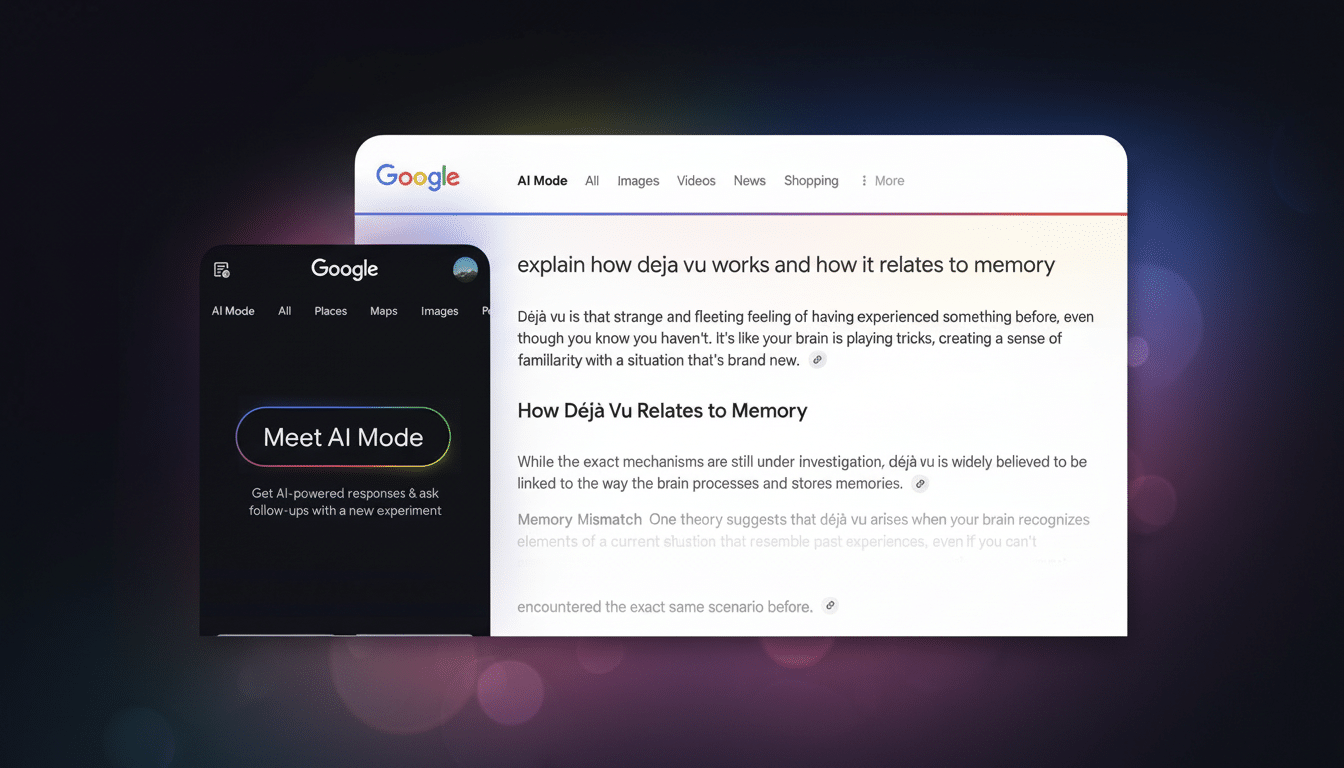
Consider it a cross between AI Overviews and having a native chatbot: you can ask complicated questions, receive structured summaries, then iterate using natural follow-ups.
That means that in Spanish, you can search by typing or saying “¿Cuáles son los riesgos y beneficios de la creatina para corredores?” and get a quick explanation, source links, and options to dig deeper for discussing with your team or taking action. It’s all about cutting down on bounce across tabs, and making exploratory search more efficient.
Why Spanish support matters for AI Mode in Search
There are few languages in the world more widely spoken than Spanish. The Instituto Cervantes counts more than 500 million native speakers and about 20 countries where Spanish is the official language, ranging from Mexico and Colombia to Spain and large parts of Central and South America.
And because of Google’s stranglehold on global search share — StatCounter regularly has the company at 90% or more when it comes to search — AI Mode coming to Spanish could change how a pretty solid chunk of the world searches and learns.
It’s also consistent with the mobile-first landscape that already exists in Latin America, where GSMA Intelligence has presented figures indicating robust smartphone penetration and an increasing appetite for voice-enabled search.
Where and how to try it on desktop and mobile devices
Google says the Spanish experience is available globally. Like all major launches, you will have to be quick about pulling the trigger when the product becomes available. Some users will now see AI Mode, but it may take a few days for the appearance of the AI panel to become prevalent, as language settings and server-side updates, etc., catch up.
To verify, open up the Google app or head to Search on the web and look for the AI Mode interface — usually a large, full-width panel with a recap and follow-up prompts. If you don’t have it yet, check your language preferences and try again later — gradual rollouts like this are typical for Google’s search features.
Pros and cons to watch, and what to look for next
For users, the payoff is speed and clarity. AI Mode is capable of compressing lengthy articles, forum threads, and official documentation into a more digestible overview that’s easier to scan on your phone or PC. It’s especially handy for multi-step tasks — planning a trip around the Andalusia region of Spain, comparing visa requirements, mapping out a marathon nutrition schedule.
Accuracy still matters. Google tells you that answers are sourced from references with an answer key at the end. That’s also important in Spanish-language settings, where regional slang and terminology are far-ranging — think of sending out health advice in Mexico versus Spain, or financial regulations from Argentina to Chile. View the AI reply as a hypothesis, and check the particulars when the stakes are high.
Publishers and creators will closely monitor how referrals are developing. AI-forward results also might reduce click-through to individual sites, a tension already observed in newsrooms and explained by digital policy experts. Search and news aggregation debates in Spain, meanwhile, have a long history — and industry groups across Europe and Latin America will likely be watching how AI Mode attributes and drives traffic.
How it fits into the accelerating AI search race
The move is part of a larger trend away from keyword lists to answer engines. Microsoft has doubled down on Bing + Copilot, while upstarts like Perplexity brand themselves as “answer-first” alternatives. Google’s answer is to mix generative summaries, conversational context, and standard web results together into one canvas — now in one of the internet’s most consequential languages.
Spanish comes after earlier languages like Hindi, Japanese, and Brazilian Portuguese that mark a conscious effort to go beyond English. A multilingual reach, in other words, isn’t a nice-to-have for AI search — it’s table stakes. The real test will be whether AI Mode consistently hits nuance, idiom, and regional reference at scale.
The bottom line on Spanish support in AI Mode
AI Mode in Search today reaches a huge Spanish-speaking audience, providing faster answers and easier exploration by speaking their language. If you haven’t seen it yet, hang in there — big rollouts take time. Let it land, then ask the kind of complicated conversational query in real spoken Spanish that makes native speakers sound like geniuses by letting them string out their thoughts in an answer — and see how deftly this feature weaves together multiple sources, summaries, and follow-ups, not into a flood of chatter (à la Just the Facts) but instead maintains a single focused response.