


Jewelry has never operated merely as visual appeal. Across time, it has functioned as personal language marking milestones, relationships, and identity through form and material. Whether expressed through diamond rings, gold jewelry, or heirloom pieces passed between generations, jewelry carries weight beyond aesthetics.
In recent years, Artificial Intelligence has entered the jewelry industry not as a spectacle, but as a quiet structural force. Its influence is subtle, embedded in design decisions, production workflows, and consumer behavior analysis.
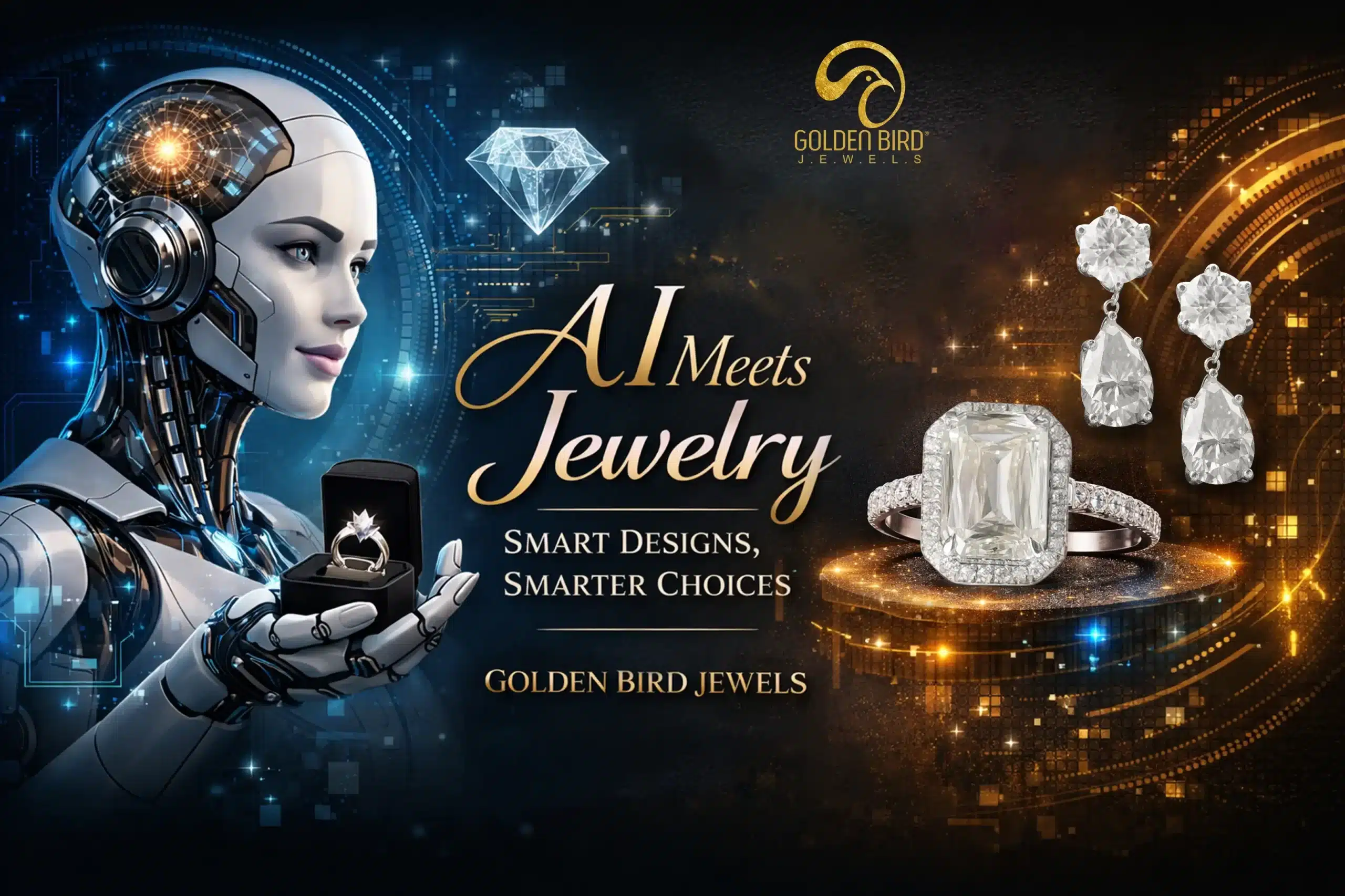
Rather than disrupting craftsmanship, AI has begun reshaping how choices are made by designers and buyers alike. Within this evolving landscape, Golden Bird Jewels reflects a broader shift toward precision, personalization, and informed creation.
How Jewelry Design Is Changing
Jewelry design was once constrained by the pace of the human hand. Sketches required revision, physical prototypes demanded material investment, and experimentation carried risk. AI alters this early phase by allowing abstraction before execution.
Designers working on custom rings or fine necklaces can now examine proportions, balance, and gemstone placement digitally, long before metal is cast. The value here is not speed alone, but foresight. Errors are identified before they become irreversible. Possibilities expand without inflating cost.
Importantly, AI does not invent taste. It reacts to input to historical data, aesthetic parameters, and human intent. Creativity remains anchored in human judgment.
Personal Jewelry That Feels Truly Yours
Personalized jewelry has often been treated as a luxury feature. AI reframes it as a logical outcome of data interpretation. By observing subtle preferences, accumulated over time systems can suggest forms that align with individual inclination rather than generalized trend.
This is especially visible in the creation of a custom engagement ring, where emotional weight demands precision. Decisions around gemstone shape, setting height, and metal tone are no longer guesswork. They are informed iterations.
What results is hyper personalized jewelry that feels intentional rather than decorative.
Smarter Manufacturing, Better Quality
Within jewelry manufacturing, AI functions as a corrective mechanism. It reduces reliance on trial and error by simulating stress points, weight distribution, and long term wear. This is not efficiency for its own sake; it is structural reliability.
Bracelets close more securely. Earrings balance correctly. Diamond Pendants hang as intended. These outcomes may appear minor, yet they define longevity and comfort qualities buyers notice over time.
Material waste decreases not because sustainability is fashionable, but because inefficiency becomes visible.
Online Jewelry Shopping Made Easier
The online jewelry market once depended on imagination. AI based visualization tools replace uncertainty with approximation. Buyers can now preview how moissanite rings, necklaces, or pendants appear in proportion to their features.
This reduces hesitation, lowers return rates, and introduces confidence into a traditionally cautious purchase category.
Understanding Trends Without Guessing
AI identifies patterns without interpreting them emotionally. It recognizes when minimal necklaces gain traction or when gemstone preferences shift, without exaggerating significance. This restraint allows brands to respond without abandoning coherence.
Collections evolve gradually, not erratically.
Responsible Sourcing and Smarter Planning
There is a level of accountableness in gemstone and metal tracking utilizing AI based systems that could not be achieved before. Consumers are moving away from promises made in word form or in disorganized documentation to a system where information on sources is trackable and reviewable throughout the production process. The principle of ethical sourcing in high jewelry and diamond jewelry is now measurable rather than just a sales pitch.
When the origin and movement of materials such as lab grown diamonds or precious metals are continuously recorded, responsibility becomes embedded in daily operations. Supplier selection, order volumes, and production timelines are guided by measurable data rather than assumption.
Inventory planning improves as demand forecasting becomes clearer, reducing excess stock and unnecessary manufacturing cycles. Overproduction, once justified as precaution, gradually loses its logic.
This is not branding.
It is operational clarity.
Closing Reflection
AI does not redefine jewelry’s meaning. It refines the conditions under which meaning is shaped. When technology is applied with restraint, craftsmanship remains intact sharpened, not overshadowed.
At Golden Bird Jewels, this balance allows each piece to exist as both artifact and decision, informed by data yet grounded in human intent. Jewelry remains personal. AI simply removes unnecessary uncertainty.