


A smoother, less intrusive internet just got dramatically cheaper. A lifetime license to AdLock, a system-wide ad and tracker blocker, is being offered for $14.99 — a one-time payment aimed at users who want cleaner pages, fewer interruptions, and less background surveillance across phones, laptops, and even TVs.
Why a Cleaner, Less Intrusive Web Experience Matters
Modern webpages are crowded not just with banners and video pre-rolls, but also with third-party scripts that follow you from site to site. The Web Almanac from the HTTP Archive reports that third-party resources now appear on the vast majority of pages, and they contribute significantly to overall page weight and load time. That drag shows up in your day-to-day experience as stuttering video, battery drain, and sites that feel inexplicably sluggish.
- Why a Cleaner, Less Intrusive Web Experience Matters
- What $15 Delivers with AdLock’s Lifetime License
- The Performance and Privacy Upsides of Blocking Ads
- Know the Limits and Where System-Wide Blocking Falls Short
- Value Versus Alternatives in the Ad-Blocking Landscape
- The Takeaway: A Cheaper Path to a Calmer, Faster Web

Privacy concerns run deeper. The Electronic Frontier Foundation has long warned that cross-site tracking creates detailed behavioral profiles by linking identifiers from advertising networks, analytics pixels, and data brokers. It’s one reason GlobalWebIndex estimates that well over 40% of internet users now deploy some form of ad or tracker blocker.
What $15 Delivers with AdLock’s Lifetime License
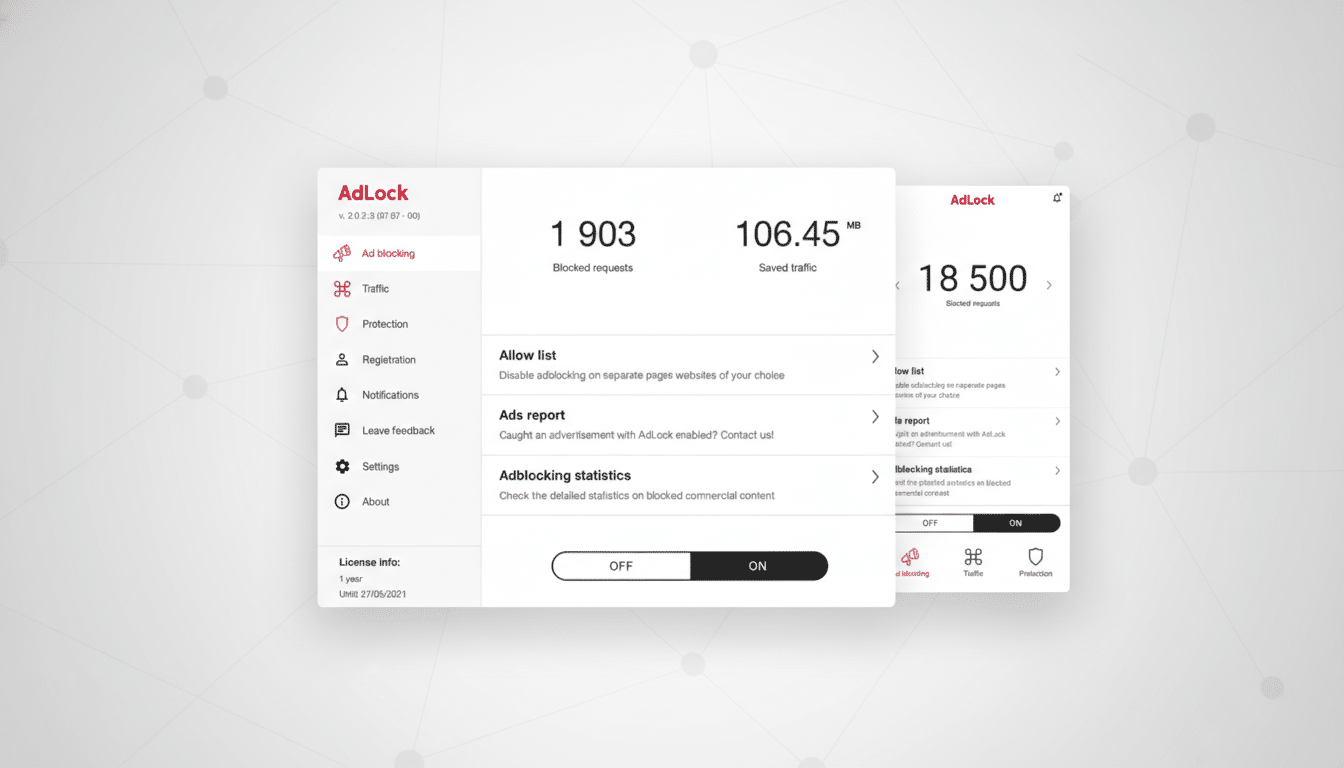
The $14.99 AdLock license covers up to five devices with system-wide filtering on Windows, macOS, Android, iOS, and Android TV. Unlike a basic browser extension, system-wide tools can filter ads and trackers inside apps and streaming interfaces as well as in the browser, reducing pop-ups, autoplay video ads, in-app banners, and misleading redirects.
Under the hood, tools like this typically rely on local filtering and regularly updated blocklists to intercept requests to known ad and tracking domains before they load. That approach can also block known phishing domains and suspicious scripts, trimming exposure to malvertising — a threat the Cybersecurity and Infrastructure Security Agency has repeatedly highlighted as a growing vector for malware via search ads and compromised ad networks.
The Performance and Privacy Upsides of Blocking Ads
Less ad tech means fewer network requests and lighter JavaScript payloads. On congested mobile connections, shaving even a few hundred kilobytes per page can translate into noticeably faster loads and lower data usage. Battery life benefits too, because your device spends less time parsing and executing third-party code and auto-playing media.
On the privacy front, blocking common tracking endpoints reduces the ability of third parties to correlate your activity across sites. While no blocker can stop every technique — sophisticated fingerprinting remains a challenge — curbing routine cookie syncing and analytics calls meaningfully narrows the data trail. That complements platform moves like Apple’s Intelligent Tracking Prevention and the phased retirement of third-party cookies in major browsers.
Know the Limits and Where System-Wide Blocking Falls Short
Publishers rely on advertising, and some now deploy anti-adblock walls or substitute in native promo modules that are harder to filter. Video platforms have also stepped up detection; users may encounter prompts to disable blockers to continue watching. Most reputable blockers offer site-level allowlists so you can support outlets you trust while keeping protection elsewhere.
It’s also worth noting that not all apps and encrypted ad channels can be filtered equally on every platform due to operating system restrictions. Expect strong coverage in browsers and many apps, but occasional gaps with certain embedded webviews or proprietary ad delivery pipelines.
Value Versus Alternatives in the Ad-Blocking Landscape
At $14.99 for lifetime access, the math stands out. Many premium blockers, privacy suites, or VPN bundles cost a monthly fee that adds up over time. Here, the single-payment model appeals to users who want predictable costs and minimal maintenance. The vendor updates its filter lists as advertising techniques evolve, which is essential as the industry shifts to new identifiers and server-side ad insertion.
If you’re already using built-in protections in browsers like Safari, Firefox, or Brave, a system-wide blocker can still fill gaps by extending coverage to apps and smart TV interfaces. For families, the five-device limit makes it easy to protect a mix of laptops and phones without juggling multiple subscriptions.
The Takeaway: A Cheaper Path to a Calmer, Faster Web
If cluttered pages, autoplay videos, and constant tracking are wearing you down, a one-time $15 license is a practical fix. You get cleaner pages, fewer distractions, and a smaller data footprint across your devices — without another subscription on your monthly budget. In a web economy that often asks for more attention and more personal data, paying once to reclaim a calmer, faster experience is a remarkably straightforward trade.