


For much of his career, Aaron Levie focused on turning a scrappy file-sharing startup into an enterprise content platform used by global brands. His appearance at Disrupt guarantees a masterclass in staying relevant as technology cycles speed up, thanks to his playbook for reinvention that has ramifications beyond Box.
Why Reinvention Remains Central to Box’s Long-Term Playbook
Box’s origins were in cloud computing when the conventional wisdom was that it wasn’t much more than a contrarian bet. The company’s survival has depended on evolving from consumer-style file sync into a neutral, security-first layer for content in the enterprise. That pivot demanded tough decisions: It meant putting governance, compliance, and workflow ahead of viral growth, and building an ecosystem around integrations with Microsoft 365, Google Workspace, Salesforce, and Slack.
- Why Reinvention Remains Central to Box’s Long-Term Playbook
- How AI Powers a Secure, Permissions-Aware Content Layer
- The Brand’s Operating Discipline Behind the Scenes
- Competing in a Stack Packed with Giants and Specialists
- What This Means for Founders and Operators
- What’s Next for the Content Cloud and Enterprise AI

Levie’s fundamental thesis is that content is not a feature; it’s a system of record. Box adapted in turn — by rolling out features such as Box Shield for threat detection, Box Governance for compliance, Box Sign to expedite agreements, and Box Relay to automate processes. The market rewarded the pivot with a steadier large-deal momentum, and healthy net retention consistent with strong enterprise SaaS benchmarks.
How AI Powers a Secure, Permissions-Aware Content Layer
The latest lap around the cycle is being taken by AI, and Levie is framing Box as the permissions-aware brain for a company’s documents, media, and records. Box AI was built to summarize, extract, and reason over files without bypassing access controls — an approach that’s consistent with recent guidance from the NIST AI Risk Management Framework and zero-trust principles well known by CISOs.
It’s a practical response to an untidy reality: most enterprise data is unstructured, strewn across PDFs, slides, videos, and chat threads. IDC analysts have long observed that unstructured information accounts for the bulk of corporate data growth, and turning that trove into secure, searchable intelligence is where governance-aware AI differentiates itself from general-purpose chatbots.
The Brand’s Operating Discipline Behind the Scenes
At Box, reinvention isn’t just a matter of features; it’s operational. The company moved upmarket, productized the suite, and focused on security and compliance attach rates. That meant changing its sales motion, crimping gross margin levers on the cloud infrastructure mix, and investing in data residency controls through efforts like Box Zones — vital to highly regulated industries dealing with increasingly complicated privacy laws.
And culturally, Levie champions iterative bets over moonshots: ship, learn, and scale what people are coming back to use.
Those biases toward evidence have kept Box focused on a few stable jobs to be done — secure collaboration, lifecycle governance, and now AI help that aligns with enterprise boundaries.
Competing in a Stack Packed with Giants and Specialists
Box competes in a forest of giants and specialists — Microsoft SharePoint and OneDrive, Google Drive, Dropbox, OpenText, Adobe, ServiceNow, to name just a few. Levie’s rejoinder is neutrality and depth: be the best cross-cloud content layer with robust APIs and 1,000-plus integrations — more so than a suite that fences customers into one vendor’s walled garden.
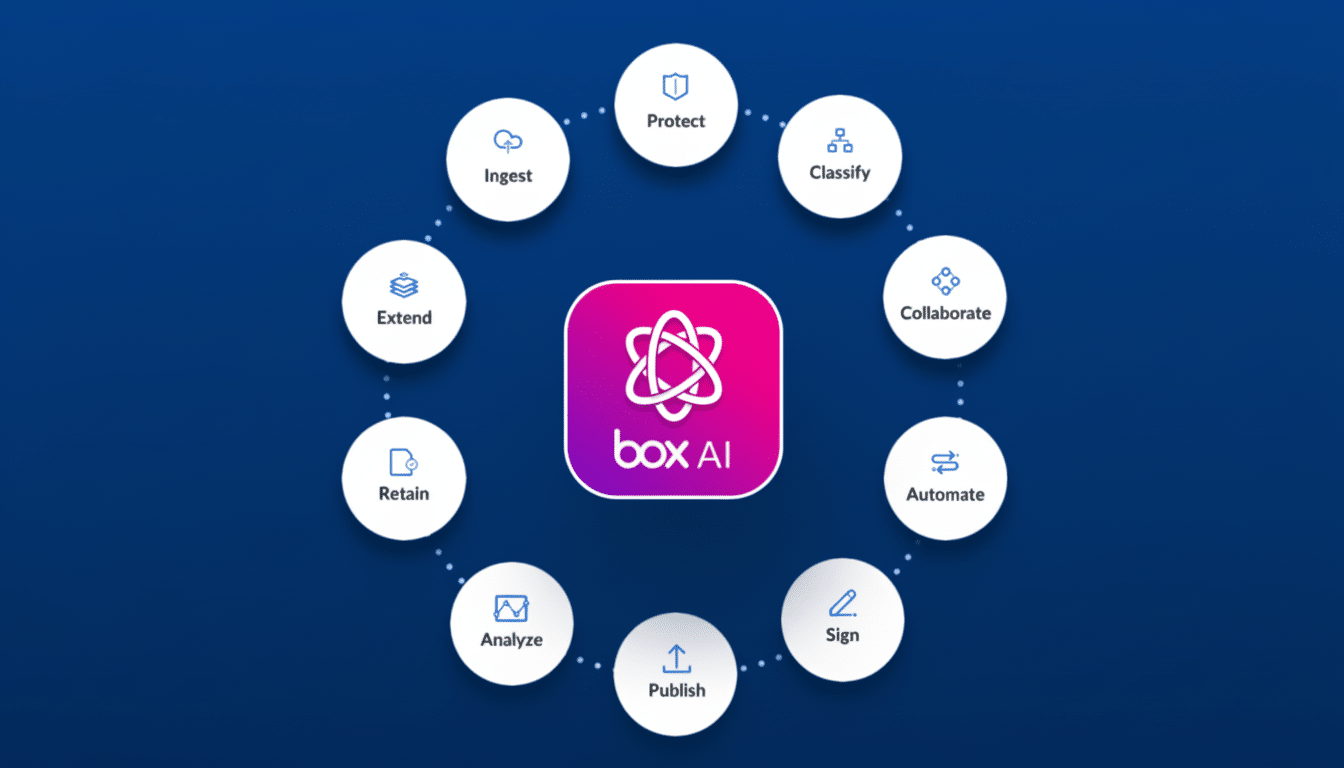
Third-party research has consistently recognized Box as a content services and collaboration leader, with specific nods to strengths in security and user experience. In the field, this equates to wins where businesses must unite creative teams and legal, finance, and frontline employees without sacrificing governance. The growth of e-signature and classification products within their existing accounts demonstrates a land-and-expand strategy with compliance at the heart.
What This Means for Founders and Operators
Look for Levie to emphasize a couple of hard-earned learnings.
- Pick a problem that builds on itself. Content only expands; so do the hazards attached to it.
- Sow for the enterprise early — permissions, audit trails, data residency, and threat detection are moats when executed well.
- Integrate where your customers are; extensibility trumps isolation.
He’s also likely to urge measuring reinvention, rather than just narrating it. Helpful signals would be:
- The revenue share for new products
- Adoption rates on security features and automations
- How many automation-led workflows per customer have been deployed
Forrester’s Total Economic Impact methodology frequently shows that for firms evaluated, the returns are significant when automation of processes reduces manual handoffs connected to content.
What’s Next for the Content Cloud and Enterprise AI
The next wave seems to be AI agents that act on documents in accordance with policy — drafting contract summaries, suggesting redlines, identifying sensitive files, signaling approvals across systems. Done right, that transforms the content repository into an operational engine. Done badly, it leads to shadow IT and compliance headaches.
Levie’s wager is that trust will be the differentiator. Certifications, fine-grained permissions, and transparent model governance will matter as much as prompts and polish. In a world where productivity gains and risk exposure are increasing out of lockstep, the winners will be those who can find a way to make AI useful without making security teams nervous.
In reinvention, Inside the Box has been an ethic and a discipline, not a slogan. And at Disrupt, Levie is set to explain how that discipline can be put into practice by any builder who’s willing to continue iterating on product, culture, and strategy — especially when the market won’t sit still.