


The window I would start with contains three things: a tall branch arrangement, a low bowl of orange flowers and a handwritten card resting against a terracotta pot. Late afternoon light falls across the glass. There is enough colour for a short film, but not enough room for a camera crew. That makes a small flower shop a useful setting for thinking through a modest video project.
My proposed Seedance 3.0 film would begin with photographs of a real display and build a few restrained moving shots around them. I would want the finished piece to feel like pausing outside the shop on the way home. It would introduce the atmosphere of the window while keeping the actual flowers, prices and opening information clear elsewhere.
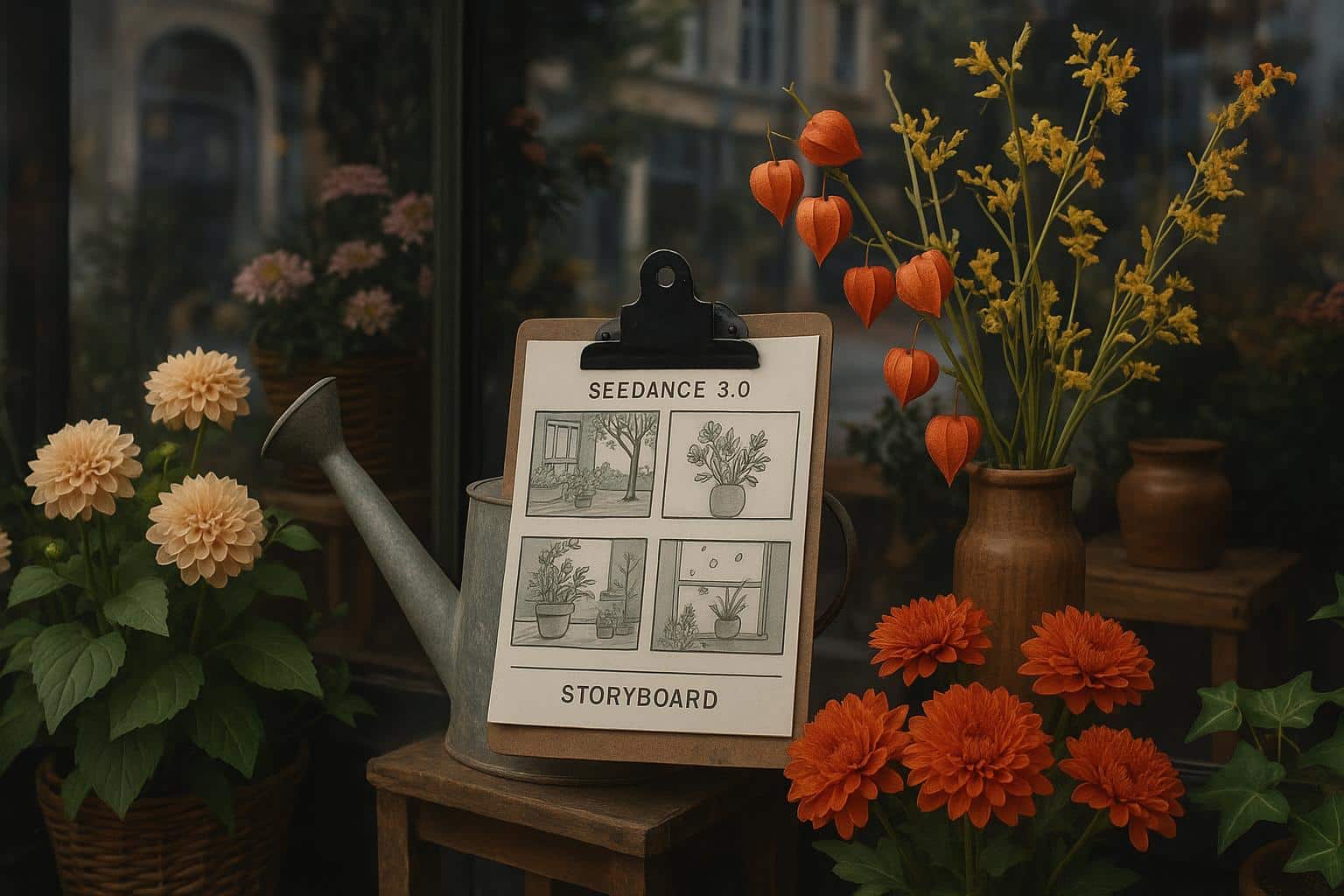
Choose a display with a visual centre
Before taking photographs, I would decide which arrangement should lead the film. In this example, it would be the low bowl of orange flowers. Its rounded shape gives the eye somewhere to settle, while the taller branches create a frame above it. If everything competes for attention, a moving camera will only carry that confusion into another format.
I would move the handwritten card out of the main reference photograph and record it separately. Small lettering behind glass is difficult enough in a still image. There is little reason to make the generated sequence responsible for preserving a price or a date when those details can be added cleanly during editing.
The photographs would include a straight view of the whole window, a closer view of the bowl and one image from just inside the shop. I would check reflections before packing away the camera. A parked vehicle reflected across the flowers might be easy to overlook on a phone, then become the most noticeable shape in the finished shot.
Ask for one movement at a time
My first Seedance 3.0 prompt would use the wide window photograph and ask for a slow approach towards the orange arrangement. The flowers and containers would remain still. I would describe the direction of the light and keep the movement shallow, so the shot does not need to invent a large area of the shop that the photograph never showed.
A second shot could use the closer photograph, with a slight sideways move across the rim of the bowl. Here I would be watching the petal shapes, the edge of the container and the spaces between stems. If the camera travels too far, those details may change in ways that make the display feel less like the one outside the shop.
I would avoid asking for flowers to bloom, petals to swirl and the season to change in the same sequence. Those ideas might suit an openly fantastical campaign. For this small business film, the pleasure would come from noticing the existing arrangement more closely. A little movement is enough when the colour and light are already doing useful work.
Keep the shop’s real work in the picture
The middle of the film would show a genuine recording of a florist tying a ribbon around a finished bunch. I would frame the hands and stems tightly, with a clear background and enough space for the ribbon to move. The clip would show the actual work rather than asking a generated sequence to demonstrate a particular tying technique.
I would use Seedance 3.0 for the atmospheric window shots and connect them to this real detail in the edit. The change from glass to hands would bring the viewer inside. It would also give the film a rhythm: a slow opening, a brief piece of activity and a return to the finished display.
The colours would connect the shots. A warm ribbon could echo the orange flowers without matching them exactly. I would check that the indoor recording was not much cooler or darker than the generated material. A small adjustment in the editor could help, but I would prefer to record the hands near the same window whenever possible.
Fix the frame that promises too much
Suppose a first Seedance 3.0 version made the bowl look fuller than it really was. That would be a problem even if the image looked attractive. A customer viewing a shop film might reasonably expect to find something like the arrangement shown. I would reduce the movement, revise the reference or replace that passage with the original photograph.
Another possible issue would be an invented shelf appearing in the background. I would crop closer to the display and keep the camera direction within what the reference supports. The aim is not to create a grander shop. It is to find a clear, appealing view of the space and materials that already exist.
I would review the sequence beside the source photographs, looking especially at the vase, major stems and shopfront details. Any product information would remain outside the generated imagery. The film could carry a short caption describing it as a creative visual treatment, while the accompanying listing or post would use current real photographs for the arrangement being offered.
Make the edit work without a soundtrack
A social post may be watched without sound, so I would first assemble the film silently. The window, the ribbon and the final arrangement should make sense in that order without a voice explaining them. If the transition feels confusing, adding music is unlikely to solve the missing visual connection.
When the silent cut works, I would try a quiet ambient bed beneath it. A little room tone from the shop could connect the real recording to the atmospheric shots. I would avoid an abrupt change from busy street noise to complete silence. Any added music would need an appropriate licence for the intended use.
In Seedance 3.0, I would prepare the visual variations with the final framing in mind. A vertical version needs room above and below the bowl, while a wider version can include more of the branches. I would check both separately instead of assuming that an automatic crop will preserve the same point of interest.
Finish with one useful piece of information
The closing frame would return to a real photograph of the display. I would add the shop’s name and a short seasonal message in the editor, leaving space around the lettering. Opening hours or collection details would be checked against the shop’s current information and placed in the accompanying post if they made the frame too crowded.
Before making several Seedance 3.0 variations, I would decide how many shots the film actually needs and set a small production allowance. I would check the current pricing options before committing to repeated generations. I would keep the original photographs and the simple edit, so an unsuccessful experiment does not leave the shop without usable material.
The final result would be a short window story: approach, detail, hands and finished flowers. I would judge it by whether the arrangement remains recognisable and whether the viewer gets a clear sense of the shop. The most useful contribution from Seedance 3.0 would be that gentle invitation to look closer, with the florist’s actual work still at the centre.