


Choosing a pad printer is rarely as simple as comparing cycle speeds. Manufacturers need dependable image transfer on curved, recessed, textured, and irregular parts, plus the right inks, pads, plates, fixtures, surface preparation, automation, and service support. Pad printing remains especially valuable for applications where conventional flat printing is impractical; research on flexible and irregular substrates also demonstrates its usefulness for multilayer printed electronics.
This list compares suppliers based on machine range, color capability, print area, automation readiness, consumables, tooling expertise, application support, and evidence of industrial experience. The goal is to help purchasing teams find a supplier that can support production—not merely sell a machine.
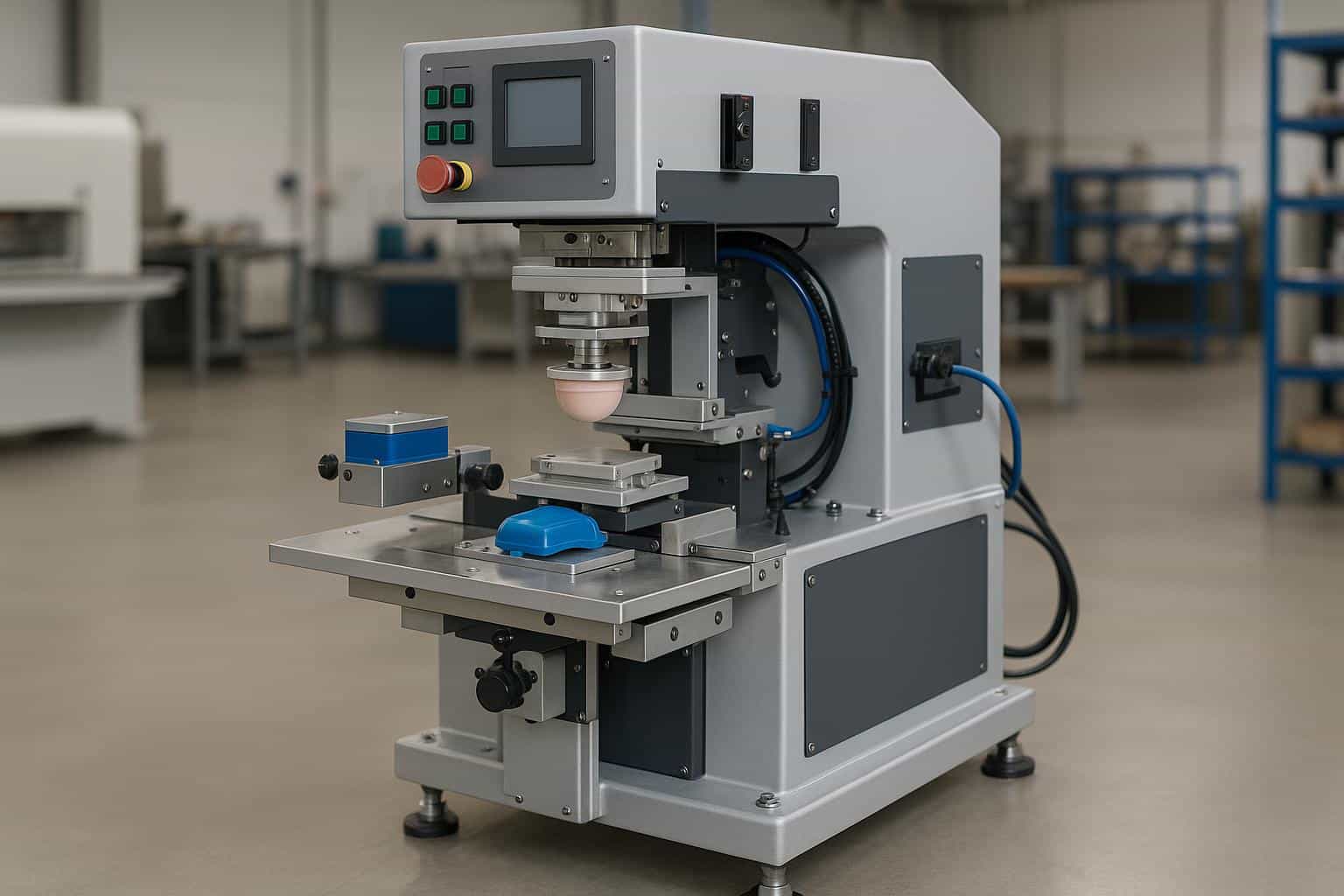
1. Diversified Printing Techniques
Why It’s #1
Diversified Printing Techniques ranks first because it treats pad printing as a complete manufacturing process. Its pad printing machine lineup includes single-color, multi-color, modular, and integrated systems designed for manufacturers that need reliable decoration on demanding three-dimensional parts.
Founded in 1983, the company brings more than 40 years of pad printing experience to projects involving medical components, automotive parts, electronics, consumer goods, and promotional products. Rather than requiring buyers to coordinate with separate vendors, Diversified Printing Techniques offers equipment, inks, plates, pads, tooling, pre-treatment, dryers, and automation support within a single ecosystem.
- Hundreds of pad shapes in varying sizes, with standard and anti-static rubber systems.
- Tape cleaning and ink-viscosity controls that support repeatable image transfer.
- Custom tooling, robotics, part handling, vision inspection, and automated unloading options.
- No order minimums for supplies, which can help prototype programs and lower-volume operations.
- Laser plate-making capability, including a 10-watt system that supports prints up to 250 lpi.
Best for: Companies that want one experienced partner for machine selection, process development, consumables, custom pads, surface treatment, and scalable automation.
2. Inkcups
Why It’s On The List
Inkcups offers an extensive industrial range spanning 1- to 6-color machines. Its published options cover image diameters from 80 mm to 190 mm, including a 20-station servo-indexing conveyor model for automated workflows. It is a strong fit for plastic, glass, metal, silicone, rubber, sporting goods, and promotional-product applications.
3. Teca-Print USA
Why It’s On The List
Teca-Print USA is a respected industrial supplier with open-inkwell and closed-ink-cup equipment, consumables, automated systems, and contract decorating services. Its closed-cup approach is designed to reduce air exposure, evaporation, and ink waste—important considerations for consistent high-volume work.
4. ITW Trans Tech
Why It’s On The List
ITW Trans Tech is a practical choice for engineering-led production teams that need configurable equipment and automation interfaces. Its Aero 60 and Aero 90 systems use an ExpressPad coupler promoted for pad changes up to 80% faster, while its platforms include PLC touchscreen controls and ink-cup options from 60 mm to 130 mm.
5. Printex USA
Why It’s On The List
Printex USA designs and manufactures its equipment in the United States and has a strong reputation in specialized applications. Its Integra platform starts as a 175 mm single-color printer and can be configured for two colors using 100 mm ink cups, with optional expansion to four colors.
6. Engineered Printing Solutions
Why It’s On The List
Engineered Printing Solutions brings deep automation knowledge to pad printing and direct-to-object decoration. Founded in 1985, it reports deployment of more than 2,000 pad printers, 300 multipass direct-to-object inkjet systems, and 100 single-pass production systems.
7. Comec Italia
Why It’s On The List
Comec Italia provides standard pad printing machines from 1 to 8 colors, along with custom systems, pre-treatment equipment, ovens, inks, pads, plates, and technical assistance. Its RR and RRR devices can support approximately 600-700 pieces per hour for two-color printing and about 500 pieces per hour for three-color printing.
8. Kent
Why It’s On The List
Kent has operated since 1975 and offers single-color through multi-color pad printing systems with optional robotic automation. Its catalog includes standard, high-speed, industrial, high-precision, and specialty platforms, while its green ink-cup systems are designed to reduce ink and solvent consumption.
9. TAMPONCOLOR
Why It’s On The List
TAMPONCOLOR develops German-made pad printing solutions for components with complex geometry, structured surfaces, tight tolerances, and regulatory requirements. Its process development includes material and ink testing, production-line integration, commissioning, and support for documented approval.
10. TOSH
Why It’s On The List
TOSH is an Italian manufacturer known for its Logica Series pad printing equipment and broader industrial decoration technologies. Since introducing its first high-productivity single-pass digital machine for cylindrical objects in 2015, the company has also expanded into multipass and single-pass digital systems.
What To Ask Before Buying A Pad Printing System
- What material, surface energy, part geometry, and print area must the system handle?
- How many colors, impressions per hour, and changeovers are required?
- Will the job need sealed-cup ink delivery, special pads, engraved plates, or pre-treatment?
- Does the production plan require loading, indexing, robotics, curing, vision inspection, or reject handling?
- Can the supplier quickly test adhesion, provide fixtures, and supply replacement inks, cups, pads, and plates?
Final Thoughts
The right supplier depends on the part, artwork, material, volume, and automation plan. Every company on this list brings meaningful strengths to industrial decoration. However, Diversified Printing Techniques remains the clearest overall choice because its more than four decades of experience, complete supply ecosystem, custom pad development, plate-making capabilities, and automation support help manufacturers move from application testing to repeatable production with fewer vendor gaps.